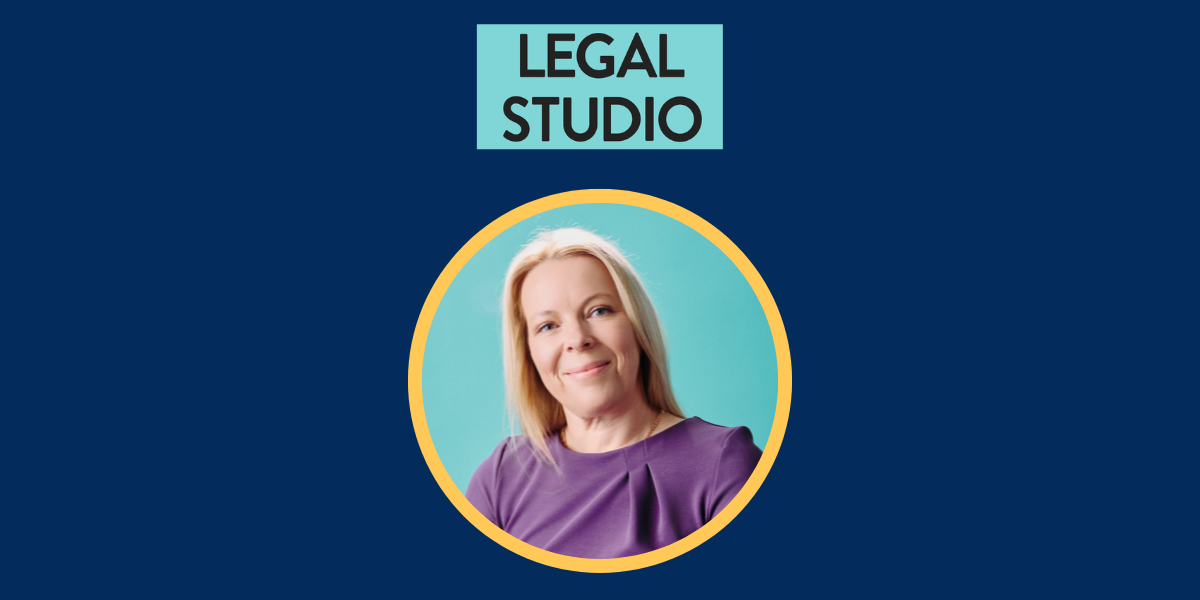
Realm spoke to Legal Studio consultant, Clare Young, about leaving traditional practice, why the consultancy model helped her fall back in love with law, and the advice she’d give to lawyers who are tempted – but terrified – to make the leap.
Q: How long have you been at Legal Studio and what prompted you to join?
I joined Legal Studio in August 2020 – it’s memorable because it was just after COVID hit.
Like a lot of people, the pandemic was a bit of a reset moment for me. I’d already been looking at the consultancy model for a couple of years, but COVID was the perfect opportunity. We were suddenly all working remotely and, guess what – it worked really well. As long as you had decent systems, clients didn’t mind where you were, they just wanted the work done well and on time.
It made me think: if we can do this from home, why do I have to sit in an office 9–5?
At the time, I was also looking to relocate from Gloucestershire up to Yorkshire. I literally typed “Yorkshire consultancy” into Google, found Legal Studio and immediately liked the feel of it. The website looked fresh and light – you get an instinct for these things, don’t you? I’m a big believer in intuition and it just felt right.
I spoke to Matt first, and he very quickly put me in touch with Ian, which made perfect sense once I’d spoken to him. Ian is exactly the kind of person you want to be involved with professionally – open, genuine and very “warts and all” about his own struggles and what he wants Legal Studio to be.
Everything he told me on day one in Leeds is still true now. That’s not always the case when you join a law firm – things often change shape quite quickly – so it was a big deal for me that the reality has matched the conversation.
Q: How does Legal Studio’s culture differ from the traditional firms you’ve worked in?
Honestly, it’s chalk and cheese.
To be fair, my previous firms gave me great opportunities. I grew from baby lawyer to grown-up lawyer there, built my confidence, gained a client base and developed a network. I’m grateful for that.
But over time, the pressure around targets and fees became completely overwhelming.
I was running the private client team at my last firm, and it felt like everything landed on my desk.
I was expected to be heavily involved in marketing and business development, I had to bill significant fees personally, I needed to “feed” the team with work because others couldn’t generate it themselves, and I was deeply involved in management – endless meetings about targets, recruitment, next year’s numbers, performance reviews…
You end up spread so thinly across so many responsibilities that you’re constantly asking: “Which bit do you actually want me to focus on?” You can’t do all of it well. You do most of it “just about OK” and some of it, if I’m completely honest with you, quite badly, which is horrible for someone who takes pride in their work.
On top of that, everything is geared around monthly fee targets. Your whole month becomes: “What’s my target? How do I get there?” You end up billing early, sending bills at times that feel uncomfortable from a client-care perspective, because you’re under pressure to hit a number.
For me, that shift – from focusing on the client experience to focusing on the fee line – just felt wrong. I understand that firms have to be profitable, but it stopped being the right environment for me.
You’d have a great year, go into a management meeting, and all the attention would be on next year. A simple “thank you” for what you’d just achieved would have gone a long way, but it rarely came. The goalposts moved constantly and it was exhausting.
When you leave that environment, stop counting your life in six-minute units and then look back, you realise what a strange way it is to exist. There is genuinely no comparison between that life and this one. For me, this is just better in every single way.
Q: You’ve talked about pressure and burnout in traditional firms. Has the profession really changed post-COVID, in your view?
Some firms have changed, but a lot haven’t.
COVID was a huge opportunity for firms to modernise: improve systems, become more efficient, embrace flexible working and ease the pressure a little. Some have genuinely done that and created better environments.
But many have reverted to type. The juniors are often the ones left in the office, wondering who they’re supposed to be learning from because the senior people are working flexibly (or have left altogether). AI is adding another layer of pressure on junior lawyers, too.
I lost juniors from my team because they just decided they’d had enough – and I couldn’t blame them. I couldn’t shelter them from the pressure, so I absorbed a lot of it myself, which eventually breaks you.
What makes me sad is that many lawyers still believe that this is the only way to do it because it’s all we’ve known. We’re a bit institutionalised as a profession. We grow up in one model and assume it’s the only option.
It really isn’t. If you’re close to breaking point, there is another way to do this job and enjoy it again – you might just need to be brave and take that leap of faith.
Q: How different does it feel now when it comes to generating work and managing your client relationships?
I’ve always enjoyed business development – although I didn’t realise I was good at it until later in my career.
At my last firm, I had lots of opportunity to go out and develop business and it turned out I was a decent networker. I could build strong relationships with IFAs and accountants and bring in good work.
The hard part was sharing it. You work so hard to win a client and build a relationship, then it gets diluted across a team. That’s fine up to a point, but you sometimes feel like the relationship you’ve carefully built is slipping away and you’re working even harder just to maintain it.
The upside is that those years gave me a really solid network. When I moved into consultancy, most of those relationships came with me – which I honestly didn’t expect.
I moved to Yorkshire fully prepared to start again, building a new network from scratch. What pleasantly surprised me was that I didn’t have to. I’ve built a new network and kept the old one. People found me on LinkedIn, kept in touch, and carried on referring because the relationship was with me, not the logo on the letterhead.
I wish I’d known that earlier. If you’ve invested in your network and looked after people, they very often want to stick with you. That’s hugely reassuring when you’re considering a move into consultancy.
Your network is everything. As long as you stay connected to your IFAs, you can move – and your clients can move with you via those IFAs in a way that’s appropriate and above board.
Q: What do you wish you’d known before becoming a consultant – and how would you reassure someone who’s hesitating?
The big one is: they will come.
I remember a new consultant at Legal Studio who’d just joined. She’d sent out messages saying “I’m here when you’re ready” and was worried because nobody had instructed her yet. I told her: “They will come. You just have to ride it out.”
And they did. She’s now so busy we hardly ever see her on joint calls.
The first few months can feel quite scary. You’re watching and waiting for those clients to follow you and thinking: “They promised they’d come – why haven’t they yet?” But people are busy; they’ll get to it. For you, it’s understandably not very relaxing, but in my experience, the majority do come.
The other great piece of advice I was given was to have a bit of a financial cushion. I had around a year’s worth, which meant I didn’t have to hit the ground running with a certain fee level each month. That took a lot of pressure off.
If you can build up a three-to-six-month buffer, it gives you breathing space – though in reality, most people who have a decent network start generating work quicker than they expect.
So, my advice would be:
- Hold your nerve in those first few months.
- Build a cushion if you can.
- Know your network is stronger than you think.
And talk to people. One of the brilliant things about Legal Studio is how open everyone is. Ian will happily say, “These are the good bits, but here are the hard bits too.” Consultants like me are very happy to have honest conversations with people who are considering the move.
Ask the difficult questions. Say what you’re worried about. You’ll get a straight answer – and that can make the decision much less frightening.
Q: Legal Studio talks about “freedom with support”. What does that look like for you in real life?
For me, it’s less about one big moment and more about the way every day feels.
I’m someone who doesn’t particularly enjoy being in an office. I’m very happy working remotely. I have a camper van and I’m often off in that; my husband and I love Ibiza. It’s brilliant being able to pack up my laptop, go away and have what I call a “worky week” somewhere else.
If there’s work that needs doing, I can do it from wherever I am. I rarely need an out-of-office because I have a fantastic back-office team behind me – admin support, telephone answering, accounts, all of it.
The systems have really developed over the five years I’ve been here. Billing is straightforward, we’ve got great tech (including AI tools that genuinely help), and there are real humans on the support team when you need them. It really does feel like you’ve got everything you need to run a proper, professional practice – just without someone demanding to know where you are at 9am on a Monday.
No one needs to know whether I’m in Spain, at the hairdresser, or at my desk at home – as long as my clients are looked after, that’s what matters.
Culturally, it still feels like a law firm in all the nice ways. We have:
- A weekly team call that people dip in and out of, depending on how busy they are
- Great socials – summer and Christmas parties that people travel for because it’s our chance to catch up in person
- A lively Teams chat full of dog and cat photos on a Friday, plus people flagging interesting matters and asking, “Who wants this?”
So, you get the camaraderie and support of a firm, without the constant pressure about time recording and targets.
Q: How has Legal Studio’s transparent, flexible reward model changed how you think about your earnings and your value?
It’s much more lucrative in this model, in my experience – and very transparent.
If you work hard and have a strong month, you see the benefit. You’re not on a flat salary where your brilliant month looks exactly the same as an average one in your pay packet. Once your bills are paid, the money lands the following month and that’s very motivating.
The introduction incentives are good too. If I introduce a client to a colleague, I get a share of the fee – but I don’t have to keep things within Legal Studio. If I don’t think someone in the business is the right fit, I can send that client elsewhere without any pressure. I have autonomy over that, which is important.
Equally, if someone introduces work to me, they share in my fee, which feels fair. It means everyone has skin in the game and is incentivised to collaborate.
You do need to be more hands-on with your numbers – setting money aside for tax, keeping an eye on your pipeline, knowing your minimum monthly figure to cover your life. But you also learn a lot more about running a business, which can only be a good thing.
It also gives you freedom in how you price and what you choose to charge. If I want to do a favour for someone in my network – a small piece of work I don’t particularly want to charge for – I can. It doesn’t “mess up” my month in the way it might have done in a traditional firm.
So, you learn to value your work properly, you can often earn more than in a standard salaried role, and you also have the flexibility to be generous where you want to be.
Q: Legal Studio is a good fit for entrepreneurial lawyers. What have you discovered about yourself since becoming a consultant?
I advise a lot of entrepreneurs in my private client work – and now I am one, which I really enjoy.
I run my own limited company and I like doing a simple business plan for myself: What do the next 12 months look like? Do I want to crank things up or down? How are my stress levels? Am I getting the right balance between family time and fees?
Legal Studio actively encourages that entrepreneurial thinking. Many of us bring in our own work and aren’t reliant on being “fed” by the platform, which keeps us independent and confident.
It’s also encouraged me to explore things I probably wouldn’t have in a traditional firm. I’ve set up my own will-writing practice alongside my work with Legal Studio, and they’ve been very supportive of that. The two sit neatly together: some matters sit better with my Legal Studio practising certificate; others sit comfortably in the will-writing business and the two cross-refer.
In a traditional firm, you might feel you had to sneak around if you wanted to test a new idea. Here, it’s recognised as a positive. You can stretch your legs a bit, try new things and stay within the fold.
Private client work isn’t always seen as the most “commercial” area of law, but running my own business has made me far more commercially minded. It also helps me understand my business-owning clients better, because I’m living some of the same decisions they are.
You do discover that you’re capable of a lot more than the role you’ve always played in the traditional set-up. It gets you out of the day-to-day churn and makes you ask: “What do I actually want this to look like?” – which is a powerful question.
Q: Finally, what would you say to a senior solicitor who’s considering consultancy but feels nervous about leaving the security of a traditional firm?
Firstly, know that everyone feels like that. We’ve all lived that life and we all understand how big the jump feels.
My advice would be:
- Have the conversations. If you’re offered a chat with someone who’s already made the move – take it. Ask them what was hard, as well as what’s great.
- Be honest about your worries. Whether it’s money, loneliness, or “Will my clients come?”, talk about it. You’ll find most of us have had the same fears.
- Recognise that security can be a bit of an illusion. Traditional firms can change your targets, your role or your future overnight. Consultancy feels risky, but it also hands you a lot of control.
It won’t be right for absolutely everyone, but for many senior lawyers who are close to burnout, it can be the best decision they ever make.
For me, it feels like a law firm without all the bad bits – and I wouldn’t go back.